The shift from the petri dish to the processor
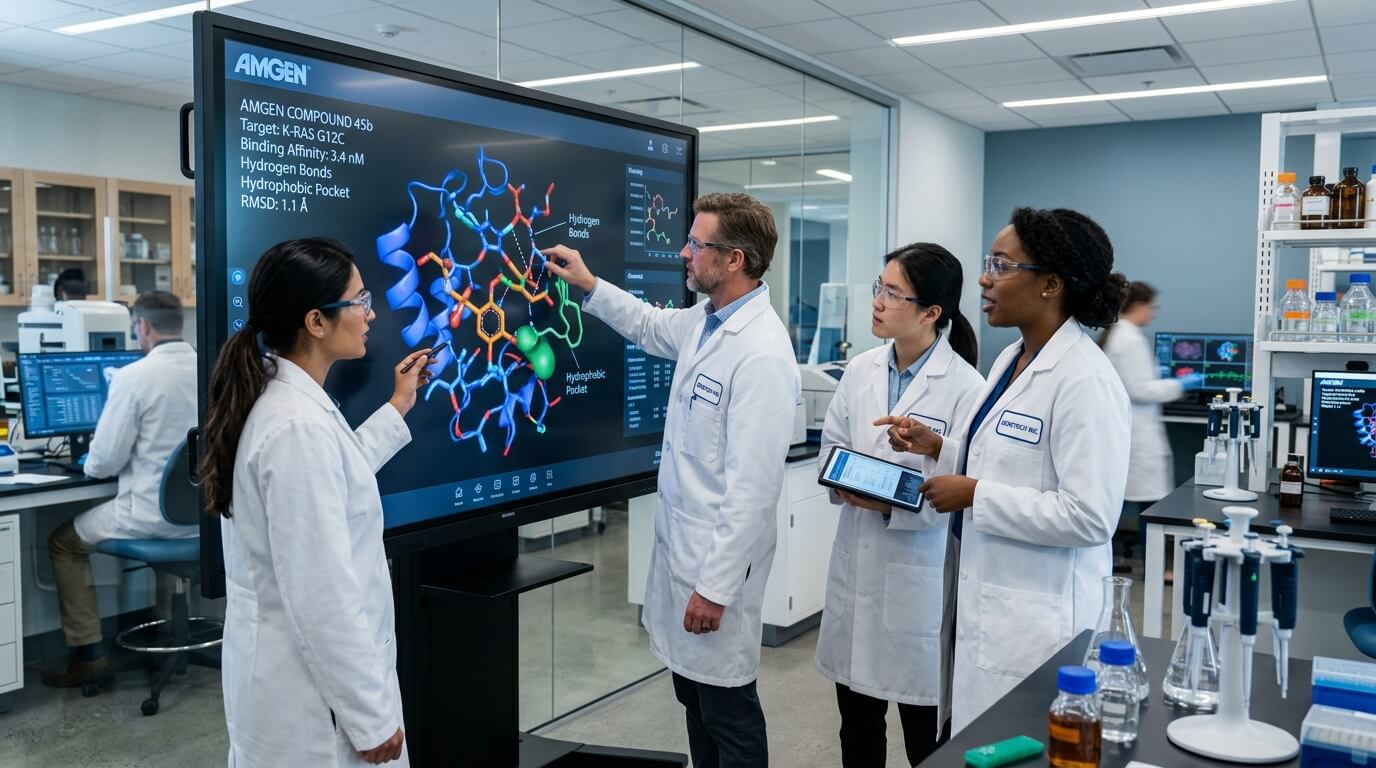
For decades, the journey of a new drug followed a very rigid and predictable path. It began with years of trial and error in a laboratory, followed by testing on animal models, and finally moving into human clinical trials. While this process has given us life-saving medicines, it is also notoriously slow, incredibly expensive, and fraught with a high rate of failure. However, a quiet revolution has been taking place in the background of pharmaceutical research. We are seeing a significant move towards digital experimentation, where computer simulations are used to predict how a drug will behave before it ever touches a living cell. This approach, known as in silico modelling, is no longer just a futuristic concept; it is a core part of modern drug discovery.
The term ‘in silico’ literally means ‘in silicon’, referring to the silicon chips found in computers. It sits alongside the traditional ‘in vitro’ (in glass) and ‘in vivo’ (in a living organism) methods. By using complex mathematical algorithms and massive datasets, researchers can now simulate the biological environment of the human body. This allows them to test thousands of chemical compounds in a fraction of the time it would take in a physical lab. It is a way of narrowing down the field, ensuring that only the most promising candidates move forward to the expensive and time-consuming stages of physical testing.
Why researchers are turning to computational tools
The pharmaceutical industry is currently facing a challenge often referred to as ‘Eroom’s Law’—the observation that drug discovery is becoming slower and more expensive over time, despite improvements in technology. This is the reverse of Moore’s Law in computing. To combat this, organisations are looking for ways to make the process more efficient. This is where in silico modelling proves its value. By creating a virtual representation of biological systems, scientists can gain insights that were previously invisible.
There are several key areas where these computational models are making a massive difference:
- Target Identification: Before a drug can be made, researchers need to identify a specific protein or gene that is causing a disease. Computers can scan vast genomic databases to find these targets much faster than a human could.
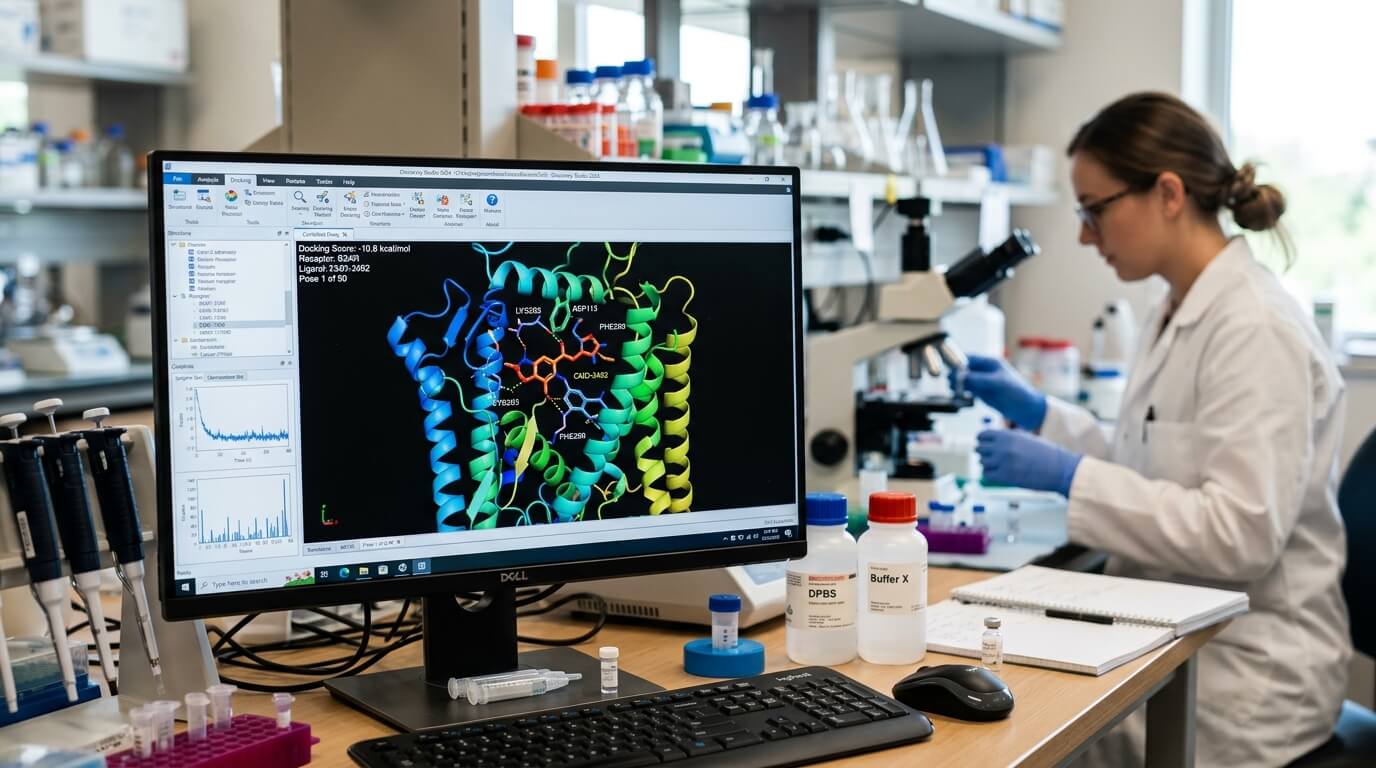
- Lead Optimisation: Once a potential drug molecule is found, it often needs to be tweaked to make it more effective or less toxic. In silico tools allow researchers to virtually ‘edit’ the molecule and see how it fits into a target protein.
- Pharmacokinetics Prediction: This involves predicting how the body absorbs, distributes, metabolises, and excretes a drug. Modelling helps predict these factors early on, reducing the risk of a drug failing in later clinical trials.
- Safety and Toxicology: One of the most critical uses is predicting side effects. For example, many drugs fail because they cause heart rhythm issues. Computational models can simulate the electrical activity of the heart to see if a new compound might be dangerous.
The role of in silico modelling in cardiac safety
One of the most exciting applications of this technology is in the realm of safety pharmacology. Historically, testing whether a drug might cause heart problems required extensive animal testing and large-scale human trials. Even then, some issues only became apparent after the drug was already on the market. Today, the industry is moving towards a more proactive approach. By using in silico modelling, researchers can test a drug’s impact on human cardiac ion channels in a virtual environment.
This is particularly relevant with initiatives like the Comprehensive In Vitro Proarrhythmia Assay (CiPA). The goal here is to move away from a simple ‘yes or no’ answer regarding heart toxicity and instead provide a nuanced, mechanistic understanding of how a drug interacts with the heart. Modelling allows for the simulation of different patient populations, including those with pre-existing conditions or genetic variations, which provides a much clearer picture of potential risks. It is about building a bridge between the molecular level and the whole-organ response.
Reducing the reliance on animal testing
Beyond the scientific and financial benefits, there is a strong ethical driver for the adoption of computer-based models. There is significant global pressure to reduce, refine, and replace the use of animals in research—often referred to as the 3Rs. While we are not yet at a point where animal testing can be eliminated entirely, in silico modelling provides a powerful alternative for early-stage screening.
When a researcher can run a simulation and find that a compound is likely to be toxic, they can stop work on that molecule immediately. This prevents unnecessary animal testing for drugs that were never going to be successful. Furthermore, because these models are based on human biological data, they can sometimes be more accurate than animal models, as animals do not always react to drugs in the same way that humans do. This move towards ‘human-relevant’ data is a major step forward for both ethics and scientific accuracy.

The challenge of data and complexity
Of course, building a digital version of a human being is no easy task. The human body is an incredibly complex system of interconnected pathways, and a change in one area can have unforeseen consequences elsewhere. For in silico modelling to be effective, it requires high-quality, high-resolution data. This data often comes from sophisticated in vitro experiments, such as those using induced pluripotent stem cell-derived cardiomyocytes (iPSC-CMs). These real-world biological results are fed into the computer to refine and validate the models.
The quality of the output is only as good as the input. This is why the best results often come from a hybrid approach. Scientists use lab experiments to gather data, use that data to build a model, and then use the model to predict the next set of experiments. It is a continuous loop of learning and refinement. As our understanding of biology grows and our computing power increases, these models become increasingly sophisticated, moving from simple 2D representations to complex 3D simulations of entire organs.
How artificial intelligence is accelerating the process
In recent years, the integration of Artificial Intelligence (AI) and Machine Learning (ML) has taken computational modelling to the next level. Traditional modelling often relies on pre-defined mathematical equations that describe biological processes. AI, however, can look at vast amounts of raw data and find patterns that a human might never notice. This is particularly useful in ‘big data’ scenarios, where thousands of variables are at play.
AI-driven models can help in several ways:
- Predicting Drug-Protein Interactions: AI can predict how a new drug will bind to a protein with incredible precision, even for proteins whose structures are not fully known.
- Repurposing Existing Drugs: By analysing existing data, AI can suggest new uses for drugs that have already been approved for other conditions, significantly shortening the development timeline.
- Personalised Medicine: Modelling can be used to predict how a specific individual, based on their unique genetic makeup, will respond to a particular treatment. This is the cornerstone of the move towards more personalised healthcare.
The synergy between human expertise, laboratory data, and computational power is creating a new era in medicine. We are moving away from a ‘one size fits all’ approach and towards a more precise, data-driven methodology. As we continue to refine these virtual tools, the distance between a scientific breakthrough and a patient receiving a new treatment will continue to shrink. The digital twin of a patient’s heart or liver is no longer a fantasy; it is a tool that scientists use every day to make medicines safer and more effective for everyone.

A film critic and entertainment writer, Daniel explores acting techniques, movie industry trends, and in-depth film analyses.